
Physical Therapy Services
Osteopathic Manipulation
Gentle, hands-on techniques that restore movement to restricted joints and the soft tissue around them.
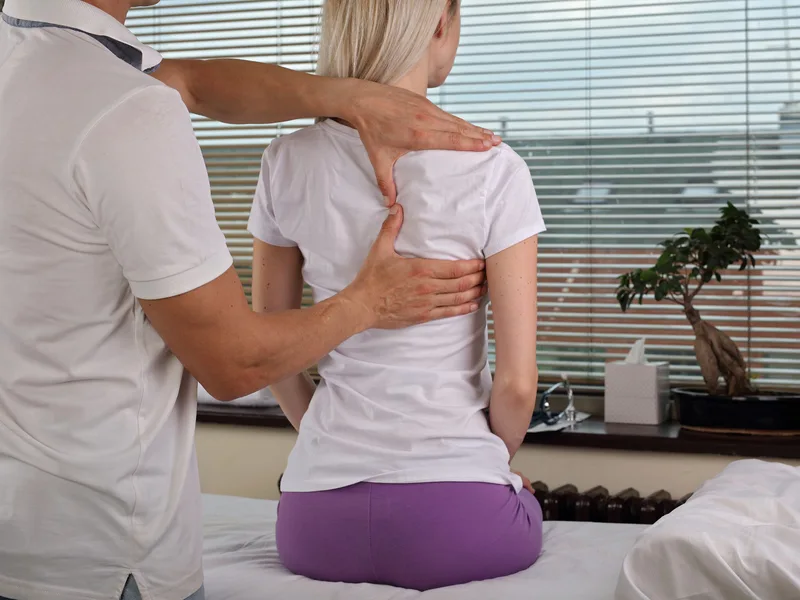
Osteopathic Manipulation
Osteopathic manipulative treatment is a hands-on approach to assessing and treating restricted movement. Rather than working only where the pain presents, your therapist evaluates how the joints, muscles and connective tissue move together, then uses graded pressure, stretching and controlled joint movement to restore that motion.
Treatment is adapted to what your body tolerates on the day. Techniques range from very gentle positional release through to more direct joint mobilisation, and are typically combined with exercise so the gains you make in the room hold between visits.
If you would like to know whether this approach suits your condition, call us and we will talk it through before you book.
How This Works
What osteopathic manipulation treatment involves
Osteopathic manipulative treatment is a hands-on approach to assessing and treating restricted movement. Rather than working only where the pain presents, the therapist evaluates how joints, muscles and connective tissue move together, then uses graded pressure, stretching and controlled joint movement to restore the motion that is missing.
Technique selection is deliberately wide, and it is chosen for what your body tolerates on the day. That ranges from very gentle positional release, where a segment is held in a position of ease until it settles, through to more direct joint mobilisation. It is normally combined with exercise so that the change made in the room holds between visits.
What to Expect
Your visits, step by step
A whole-region examination
Assessment deliberately looks beyond the painful area. Your therapist checks how the regions above and below move, because a restriction in one place is frequently why another place is being overworked.
Graded, adjustable technique
Your therapist starts with what your body tolerates and works from there. If a direct technique is too much on the day, a gentler indirect one is used to reach the same area.
Reinforcing it with movement
Hands-on work creates the range; exercise teaches you to keep it. You are given movements to consolidate what was gained rather than relying on the treatment alone.
Review at the next visit
What held and what did not is the main information for the following session, and the plan is adjusted accordingly.
Benefits
What osteopathic manipulation treatment is used for
- Used to address restricted joint movement and the soft tissue tension around it.
- Used to address problems where the painful area is being overloaded by a restriction somewhere else.
- Offers a graded range of techniques, from very gentle to more direct, so treatment can be matched to what a person tolerates.
Results of an injury vary from person to person. What is appropriate for you is decided at your evaluation — call (718) 714-6995 and we can talk it through.
Common Questions
Osteopathic Manipulation FAQs
How is this different from massage or spinal manipulation?
Massage works on soft tissue; spinal manipulation is one specific quick-thrust technique at a joint. Osteopathic manipulative treatment covers a broader set of hands-on techniques applied across joints and soft tissue together, selected according to what the assessment finds.
Is it gentle?
It can be. The technique range extends from very gentle positional release through to more direct joint mobilisation, and what is used is chosen for what you tolerate on the day.
Is it suitable for my condition?
That is what the evaluation determines. If you would like to know before booking, call the office on (718) 714-6995 and we will talk it through with you first.
Will I get exercises as well?
Almost always. Hands-on treatment and exercise are used together here, because restoring movement is only durable if the muscles around the area learn to control the range that was regained.
Explore More